 Twynon
Tiles in Nairobi: 7 safe checks to buy the right batch
Tiles in Nairobi come in more shades than the shop admits, and one short box can ruin a finished floor. Read the label, count the square metres, then lock a single batch before you pay.
Twynon team
5 November 2026 · 4 min readTiles in Nairobi are easy to buy badly. The shop is busy, the price is quoted by the box, and the shade you liked under a fluorescent tube looks flat at home. A short checklist fixes most of that.
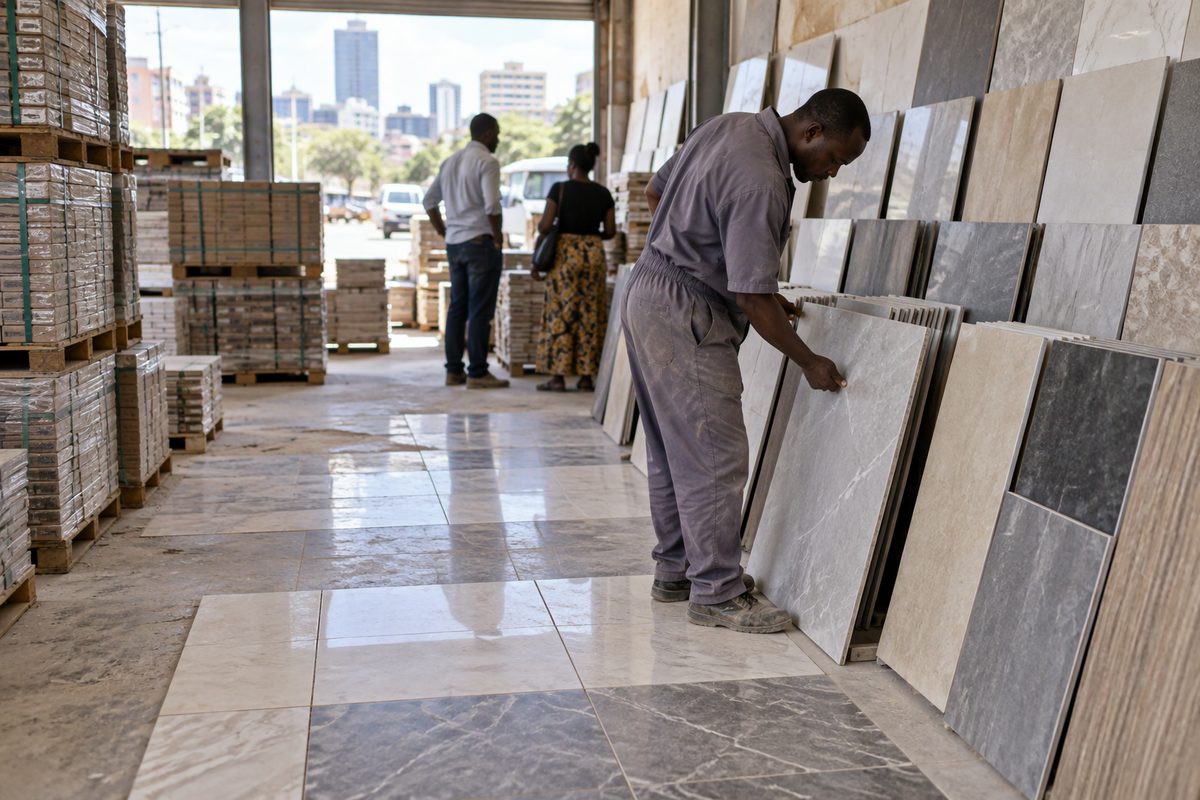
Which tiles in Nairobi shops suit your floor
Three families cover most of the market. Ceramic tiles are clay based and glazed, so they suit walls and floors with light traffic. Porcelain is fired hotter, which makes it denser and less porous. Vitrified tiles sit at the dense end, with very low water absorption.
That density matters in a bathroom or a shop entrance. A porous tile takes in water at the edge and stains from behind. A dense tile holds its colour and wipes clean. Ask the seller which family the tile belongs to, then ask for the figure on the box rather than the word on the poster.
How to read the box when you buy tiles in Nairobi
Every carton carries the same six facts. The size in millimetres, the pieces per box, the square metres per box, the batch number, the shade or calibre code, and the country of origin.
Check the coverage figure against the piece count. A box of large tiles holds fewer pieces than a box of small ones, so the two boxes cover different areas. Also look for the PEI rating and the water absorption figure. If the label leaves them out, ask for the specification sheet before you pay.
Count the square metres of tiles you need in Nairobi
Measure each room as length times width. An L shaped room splits into two rectangles, and a wall run takes height times width minus the door and window. Write the numbers down, because a shop will quote from memory.
Then add a wastage allowance. Trade calculators put it at about 10 percent for a straight lay, 15 percent for a diagonal or large format lay, and 20 percent for a herringbone pattern. So a 12 square metre floor becomes 13.2 square metres at the common 10 percent.
Finally, divide the total by the coverage printed on the box and round up to whole boxes. Rounding down is how a job ends a box short on a Friday afternoon.
Shade, batch and calibre
Tiles are fired in batches. Two batches of one design can read as two colours beside a window, and no tiler can hide that. So buy the whole job from one batch.
Some labels carry a shade variation rating from V1 to V4. V1 is close to uniform and V4 is deliberately random. Know which one you bought before the walls go up, because a V4 floor is a design choice rather than a defect.
Also open one box in the shop and stand three tiles side by side in daylight. Fluorescent light flatters a shade that looks flat in a sitting room.
Quality checks on tiles before you pay in Nairobi
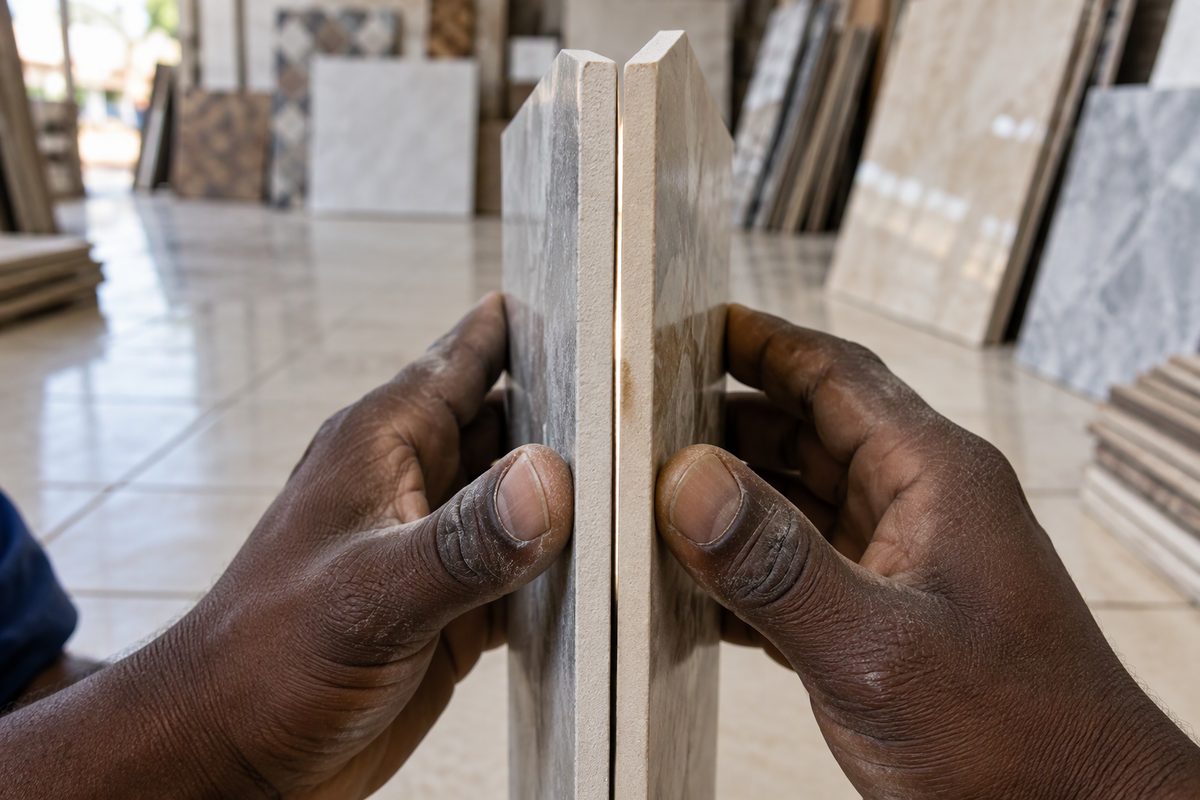
Sight along the edge of a tile on a flat counter. A tile that rocks is bowed, and bowed tiles leave a step at the joint. Check four tiles from four boxes, not four from the top box.
PEI runs from 0 to 5 and rates how much foot traffic a glazed surface survives. A busy shop floor wants 4 or more, while a bedroom wall needs very little. Porcelain absorbs 0.5 percent water or less, and ordinary ceramic absorbs more, so ask for the absorption figure when the room is wet.
Buy one extra box from the same batch
Add one sealed box to the order and keep it. A chipped tile two years later is easy to swap when the spare matches the batch. It is impossible to match once the shop has sold the run.
The spare also covers the tile a plumber lifts to reach a pipe. That usually happens after the tiler has packed up, so plan for it while the batch is still on the shelf.
Delivery, breakage and how tiles are counted
Tiles are heavy and brittle. Ask for the total weight before you book transport, then match it to the vehicle and to the people at the gate. A full job can be more than a small car should carry.
Confirm whether delivery stops at the gate or reaches the room, and who carries cartons up the stairs. Open two cartons at the door and count the boxes before the vehicle leaves. A driver who has gone is a claim you cannot win.
The written quote and the handover list
Prices move with brand, batch and size, so a figure from last month means little. Ask for a written quote that names the price per square metre, the pieces per box, the batch, the delivery day and the return terms for unopened boxes.
At handover, run five checks. Count the boxes against the quote, confirm the batch and shade match on every carton, keep one box sealed, photograph the delivery note, and file the receipt with the shop name and date.
One benchmark helps before you agree a figure. Compare the shop quote with a retail listing such as floor tiles on Jumia Kenya, and note that online prices move with the same brand and batch.
 One phone call before you travel saves most of the wasted trips. Post the room size on the Looking for feed and let sellers answer with a figure, since a tiler who has seen the room knows the real wastage. How Twynon works explains the request and the offer in one page. For another town, read buying tiles in Nakuru. You can also browse listed stock for a second price before you commit. Overall, the batch matters more than the discount.
Twynon team
Writes the buying and selling guides on the Twynon blog.