 Twynon
Price used furniture fairly: 7 checks before you pay
Price used furniture the wrong way and the delivery truck eats your saving. Build the total first. The checks below show what to inspect before you negotiate.
Twynon team
31 October 2026 · 3 min readPrice used furniture with the whole picture in view: the frame, the joints, the foam and the delivery. Most buyers negotiate the ticket price and then lose the saving on transport and repairs.
Work through these checks in order. Each one either confirms the asking price or gives you a number to deduct.
Test the frame before you price used furniture
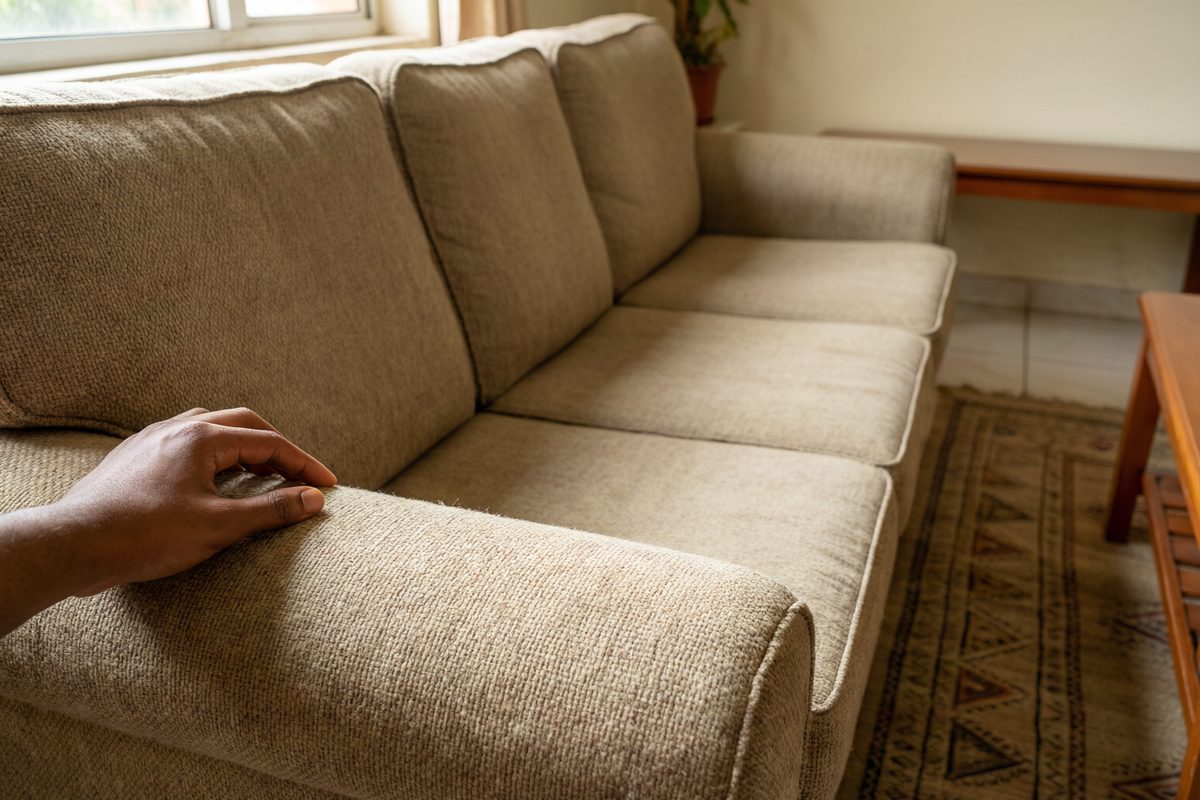
Push the sofa gently from the corner. A solid frame stays quiet, while a tired one flexes and creaks. Then lift one end and feel whether the weight transfers evenly, because a heavy end means a broken internal support.
Look under the piece with a phone torch. Solid hardwood rails with clean screws suggest quality, while staples and particle board suggest a short life. That distinction changes what a fair number looks like.
Inspect the joints on used furniture
Wobble the legs in a slow circle. A leg that moves inside its socket needs glue and a clamp, which is a small repair. A leg that has split the rail is a bigger job, and you should deduct the workshop time from the price.
Then check the seat platform on chairs. Sit down and shift your weight to one side. Squeaks and a sinking feeling point to a stretched webbing, and replacement is cheap only if you do it yourself.
Judge the foam before you price the furniture
Press the seat cushion with a flat hand. Good foam springs back within a second. Foam that stays dented is finished, and new foam for a three seater costs as much as a small table.
Check the covers at the armrests and the front edge, where hands and thighs wear the fabric first. Also unzip a cushion where you can, because a clean inner cover tells you the piece was cared for.
Confirm the size fits your room
Measure the doorway and the lift before you agree to buy. A piece that cannot enter the house is a loss, and this happens more often than buyers admit. Write the width, the depth and the height on your phone.
Then measure the space at home. A rug and a walkway need room, so a sofa that touches both walls makes a room feel smaller. Photograph the corner with the measuring tape visible, and compare it in the shop.
Add the delivery cost to the price
Tuk tuk, pickup or a man with a cart, every option has a number. Ask two movers for a price to your door before you negotiate the furniture. Therefore treat delivery as part of the purchase, not a separate errand.
Also consider the stairs. A third floor walk up with no lift adds cost and risk, and a mover may refuse a heavy wardrobe at the door.
Compare against a new piece of the same size
A used dining table at half the price of a new one is reasonable when the joints are sound. The same table at eighty percent is not, unless the brand and the timber justify it. Search the model or the material, then decide. Pricing used furniture is therefore a comparison, never a vibe.
Check whether the seller still has the receipt and the assembly screws. Missing hardware is a small cost, but missing documentation makes a warranty claim impossible.
Negotiate with evidence, not opinion
Point at the specific flaw you found, and offer a number that reflects the repair. Sellers respond to a measured observation far better than to a low offer with no reason.
When you are ready to compare real listings, browse the Twynon gallery and read seller details before you travel. You can also check services near you, or read how the platform works for the first time.

A fair price for used furniture is the ticket, plus the repair, plus the delivery. Add those three and the decision becomes obvious.
For timber and furniture care guidance, see the Forest Stewardship Council.
Twynon team
Writes the buying and selling guides on the Twynon blog.