 Twynon
Cheap baby clothes in Nairobi: 7 checks that save you
Cheap baby clothes in Nairobi come from bales, stalls and supermarket aisles, and the price tag hides the real test. These seven checks cover fabric, seams, elastic, snaps, sizing and washing before the first wear.
Twynon team
5 November 2026 · 5 min readCheap baby clothes in Nairobi are easy to find. A stall in Gikomba or a table on Toi market will fill a drawer for the price of one supermarket bodysuit. The hard part starts after the first wash, when the elastic gives out and the dye runs into the white vests.
What cheap clothes cost you later in Nairobi
A low price is only the first payment. A vest with tired elastic stops holding a nappy in place after a few washes. Faded dye usually means the cotton has been washed hard, so the fabric is thin and it tears at the seam. Meanwhile, a missing button turns a good sleepsuit into a rag, because you will not find a spare that matches. Thin fabric also shows every leak, so you wash more often and buy more soap. Then there is your time. A drawer of clothes that fail means another Saturday at the market. Overall, the second cost is usually the larger one.
Where cheap baby clothes come from in Nairobi
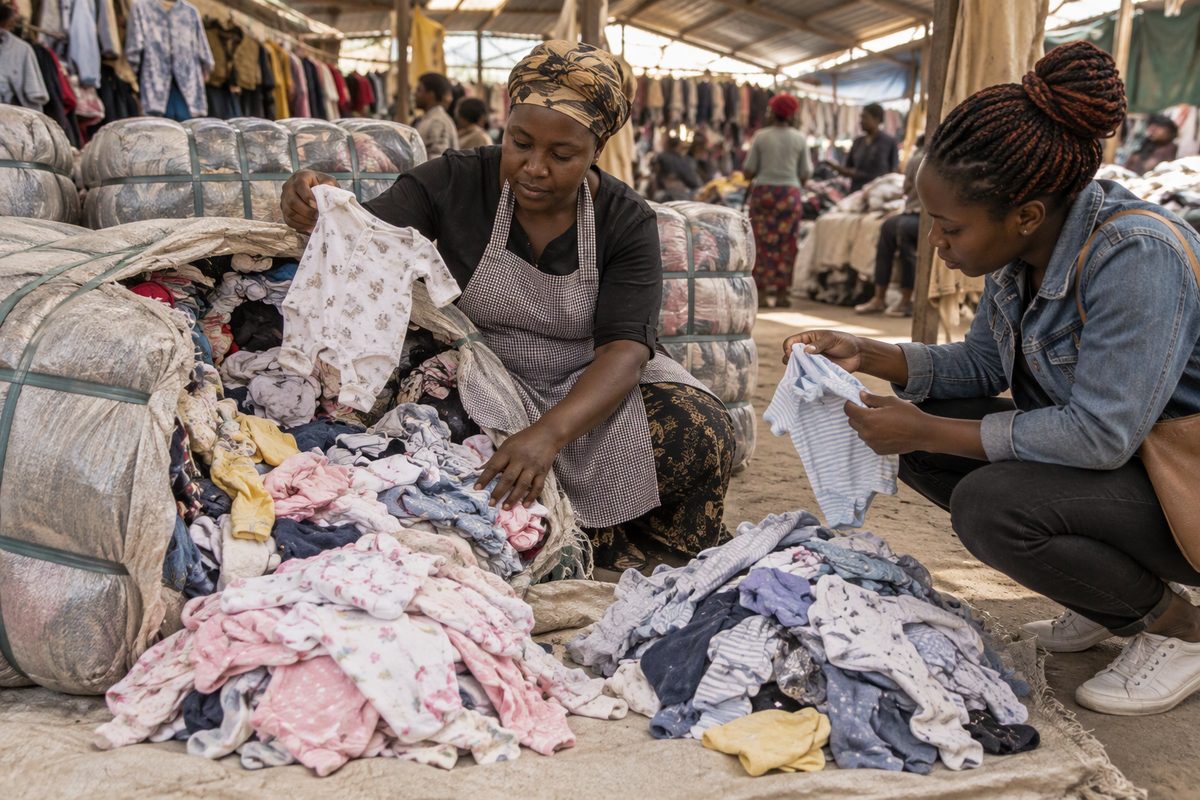
Most low priced baby clothes arrive in second hand bales. Gikomba is the wholesale end of that trade, and traders open bales there before single pieces reach smaller stalls. Toi market in Kibera sells those pieces one at a time, often below shop prices. Ngara and Eastleigh carry a mix of bales, new imports and surplus stock. The supermarket baby aisle sits at the top of the range, with new items, fixed prices and a receipt.
Bales are graded. Grade one is sold as mostly wearable stock, while grade two costs less and carries more faults. A trader who lets you open the bale before you pay is worth the extra walk.
How to check cheap baby clothes before you pay
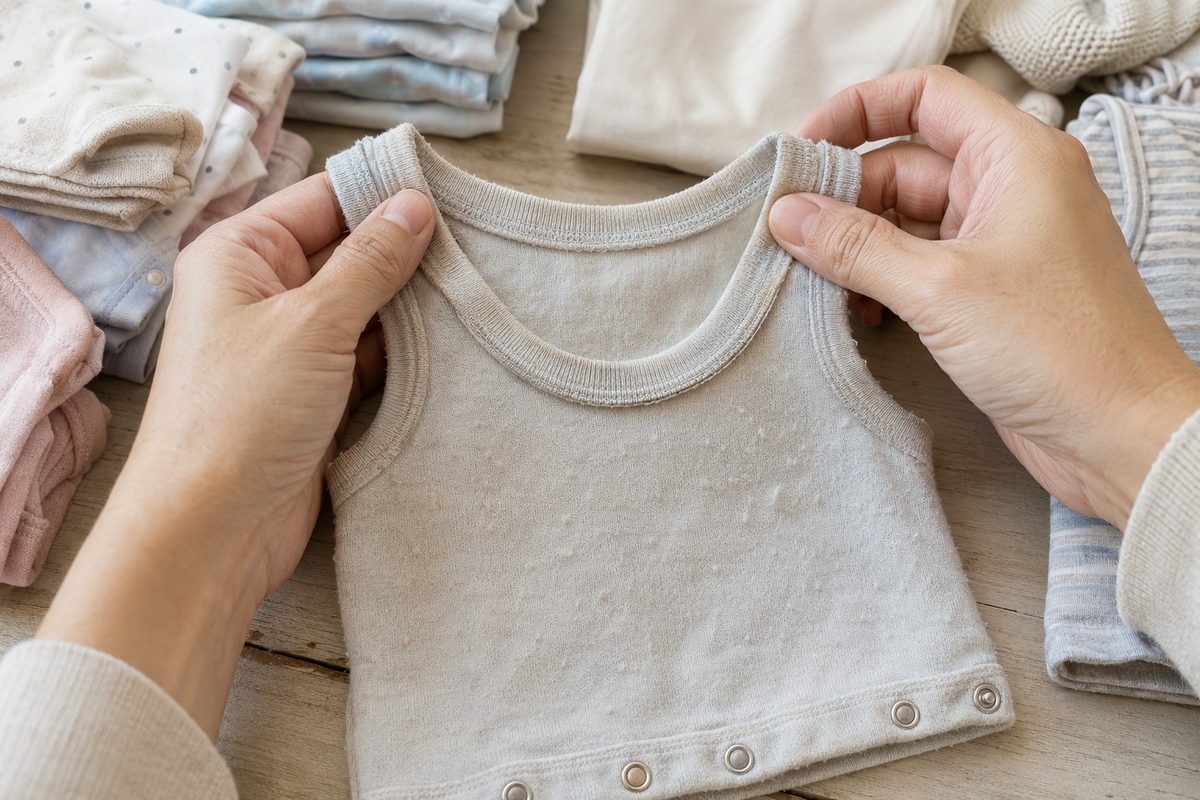
Start with the fabric. Hold a piece up to the light. A hand you can see through means a garment that will not last. Next, stretch the neck opening and release it. Good ribbing springs back, while worn ribbing stays loose and gapes. Then pull gently along the shoulder and crotch seams. Loose stitching opens in the first wash. Check the waist elastic by stretching it twice. Also, close every snap and listen for the click, then tug it to be sure it holds. Tug each button as well.
A loose button is a choking risk, so sew it down or leave the piece on the table. Safety matters most near the neck. Avoid drawstrings, long cords and loose buttons on a baby, because they catch on furniture or end up in a mouth. The US Consumer Product Safety Commission bans hood and neck drawstrings on upper outerwear in sizes 2T to 12. That rule is a sensible one to carry into a Kenyan bale.
Sizing cheap baby clothes for a fast growing baby
Babies leave the smallest size behind in a few weeks. Labels also differ between brands, so compare the length of a bodysuit against the baby rather than the number on the tag. Buy one size up in sleepsuits, since extra length at the foot is harmless and a tight foot is not. Skip the newborn size in bulk and put that money into the next size. Later, look for wide neck openings, fold over cuffs and adjustable waistbands. Those three details buy weeks of wear, and those weeks are the real saving on a bale.
Washing cheap baby clothes before the first wear
Wash everything before it touches the baby. New clothes carry factory finishes and loose dye, and second hand pieces carry dust from the bale. Soak one bright item alone in cold water first, because a strong colour run tells you to wash that piece apart from the whites. Use a gentle detergent and skip the softener, which coats the fabric and dulls absorbency. Dry in the sun where you can, since sunlight helps with stains and with the smell of a bale. Finally, check the seams again after that first wash, because it is then that weak stitching shows.
How many pieces a newborn really needs
You need less than the shops suggest. A workable starter set is eight bodysuits, six sleepsuits, four pairs of socks, two hats, two blankets and one light jacket for cold mornings. Add four bibs and three towels for bath time. That set covers about a week of washing for one baby. Also, keep two plain white pieces aside for hospital visits, because nurses ask for simple clothing. Anything beyond this list can wait until you know how fast your baby grows and how often you wash. In short, buy for the first month, not for the first year.
When new baby clothes beat cheap second hand
New wins in three cases. A gift is one, because a parent should not have to inspect a present for faults. The second is a sale, when a supermarket clears a season and the discount beats a bale price. The third is a garment that must last, such as a going home outfit or a jacket for a cold Nairobi July. New items also come with a receipt, so a failed zip is the shop's problem rather than yours. For everything else, a good second hand piece at a fair price is still the smarter buy.
Ask for the size and budget on Twynon
A bale trip costs a morning and a lot of luck. A request costs two minutes. Post a Looking for request on Twynon and describe cheap baby clothes in Nairobi that you need, add the size and your budget, and sellers reply. Requests are free and carry no daily cap, so you can ask for one size today and another next month. Then compare the replies, send an offer on the item you like, and let the seller accept, reject or counter. Contact details are released only when both sides agree, and the deal continues on WhatsApp.
None of this means a bale cannot dress a baby well. It means the price tag is a starting point and not the whole sum. Check the fabric, the seams and the neck, wash before the first wear, and buy one size ahead. Do that and a low price stops being a false economy. Before you shop, read how to check second hand clothes quality and the guide to wholesale clothes in Nairobi. The Looking for feed shows what parents nearby are asking for today. If a stall sells you a faulty item and then refuses to help, the Competition Authority of Kenya handles consumer complaints.
Twynon team
Writes the buying and selling guides on the Twynon blog.