 Twynon
Buy clothes in Nairobi: 7 proven quality checks
Buy clothes in Nairobi without guessing. Know which area sells what, check the seams and the fabric in the shop, and ask about returns before money changes hands. Here is the route a normal shopper can follow.
Twynon team
5 November 2026 · 5 min readBuy clothes in Nairobi and the first decision is the route, not the shop. New and thrift clothes sit in different parts of the city, and each answers a different need. So pick the route before you pick the matatu.
Where to buy clothes in Nairobi
The CBD is the cheapest for new stock and the easiest to reach. Biashara Street is the old clothing and fabric street. The shops around Moi Avenue and Tom Mboya Street carry office wear, school items and casual clothes.
Malls serve a different buyer. Sarit Centre, Westgate, The Junction, Yaya Centre, Village Market and Two Rivers all sit within reach. Prices are higher there, and so is the chance of a receipt and a fitting room.
Eastleigh handles new stock at volume. Traders sell new clothes brought in from abroad through plaza shops, and bargaining is normal. Also go early, carry small notes, and keep your phone out of sight.
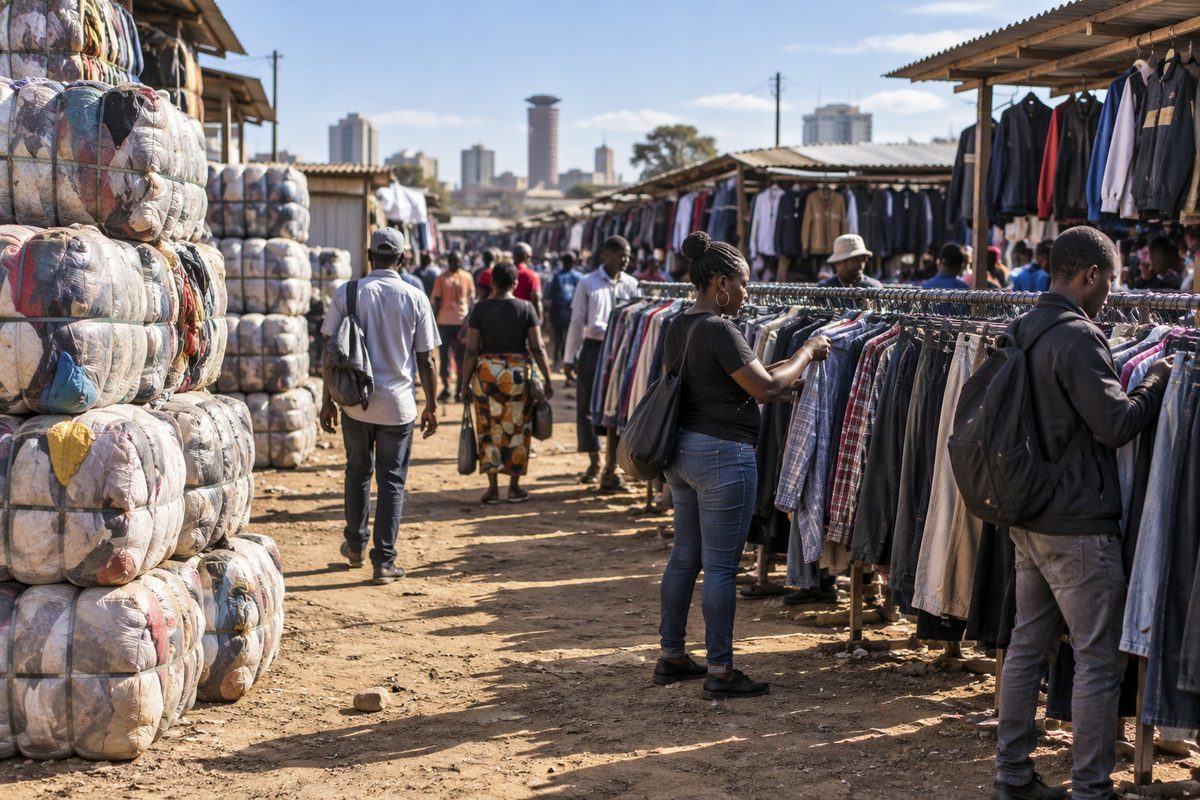
For thrift, Gikomba is the big one. It sits near Kamukunji and it is the largest secondhand clothing market in East Africa. Toi Market is smaller and easier to walk, on Suna Road, off Ngong Road, at the edge of Kibera.
New clothes or thrift clothes in Nairobi
New clothes win on consistency. A size is a size, the colour survives a few washes, and you can buy three of the same shirt.
Thrift wins on price per piece and on variety. A good rail holds jackets and denim that no mall stocks at the same money. The catch is that each piece is unique, so an exchange is usually impossible.
Buy new for anything that must last a fixed term, such as a school uniform or work shoes. Then buy thrift for layers and one off pieces you can inspect in daylight.
What a fair price depends on
Price follows four things: fabric, construction, brand and scarcity. A cotton shirt with clean seams costs more than a polyester shirt with the same label. A heavy denim jacket costs more than a thin one, because the cloth costs more.
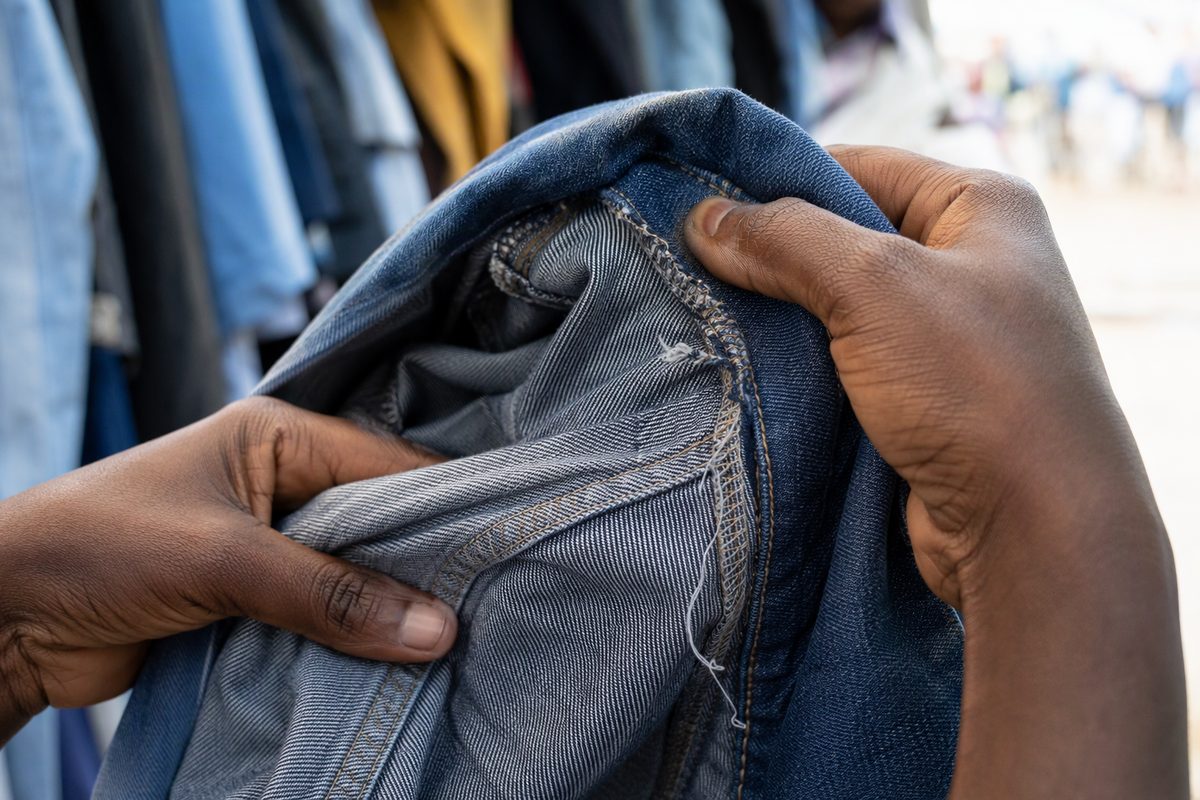
Construction is the part you can judge. Turn the garment inside out and check the seam allowance. A narrow allowance with loose thread will pull apart at the stress points.
Brand matters less, unless the label is the point. Meanwhile a size that few shops stock carries a premium, and a colour in season sells before it is discounted.
Then there is the bargaining margin. In the CBD and Eastleigh, the first price is a starting point. In a mall, the ticket price is the price, so ask which one you are in.
Check the quality inside the shop
Start at the seams. Pull the side seam gently and watch the stitches. Even, tight stitches hold, and a loose seam will open in the wash.
Run the zip up and down twice. A metal zip with a smooth pull is worth more than a plastic one that catches. Then check that it lies flat when closed, because a wavy zip means the fabric was cut off grain.
Next, weigh the fabric in your hand. Thin cotton shows light through it, and it will cling and wear at the elbows. Look for thin patches, shiny iron marks and uneven dye.
Finally, read the care label. Cotton and rayon shrink, so ask whether the piece has been washed. Buy one size up if it has not and the fabric is pure cotton.
Sizing when you cannot try the item
Know your own numbers first. Chest, waist, hip and inseam, measured on your body and saved on your phone. Then measure a garment you own, laid flat, and compare.
Thrift sizing is unreliable, because a medium from one country is a large from another. Read the measurements, not the letter on the label. A piece with no stretch and a small chest measurement will not become comfortable later.
Fitting rooms are scarce in thrift markets. Wear a thin top and leggings so you can try a jacket over them. Check the shoulder seam, because a tailor cannot fix that cheaply.
Returns worth asking about before you pay
Ask about returns before you pay, not after. Three answers matter: how many days you have, whether the tags must stay on, and whether sale items are excluded.
A good shop states the window and writes the terms on the receipt. A shop that refuses any return is telling you something useful, so inspect harder before you pay.
Thrift stalls rarely accept returns. Treat each piece as final sale and check it in daylight, before money changes hands. Then keep the receipt in your bag until you have worn the item once.
Buying clothes online without touching the fabric
Buying online takes away touch, so replace it with questions. Ask for the chest measurement, the length from shoulder to hem, and the waist laid flat. A seller who answers with numbers is easier to trust than one who answers with letters.
Ask for photos of the label, the inside seam and any mark the seller mentioned. Then ask how the piece washes and whether it has shrunk. Also ask whether the colour in the photo matches daylight.
When you buy clothes in Nairobi online, keep the answers in the chat rather than on a call. That thread becomes the description you agreed to. Pay through a channel you can trace, and avoid a deposit on an item you have not seen.
Compare new stock on Jumia Kenya before you commit. Also read our guide to checking second hand quality before you travel to a market.
Describe the garment in a Looking for request
Sometimes you know the size, the colour and the budget, and you have no idea which shop stocks it. That is a request, not a search.
Describe the garment in four lines. The item and the size, for example a navy blazer in a UK 12. The fabric and the fit you want. Your budget, and then your area, so sellers nearby can answer.
Add one photo if you have it, because a reference photo removes three messages of guessing. A few words work too, since Twynon is photo first rather than photo only.
Post the request on the Looking for feed. Sellers answer with a price and a location, so you can compare replies before you travel. Browse listings as well, because some sellers list without answering requests.
Overall, a clear request saves a Saturday and a fare. If you shop outside the city, our Nakuru clothes guide runs the same checks.
Twynon team
Writes the buying and selling guides on the Twynon blog.